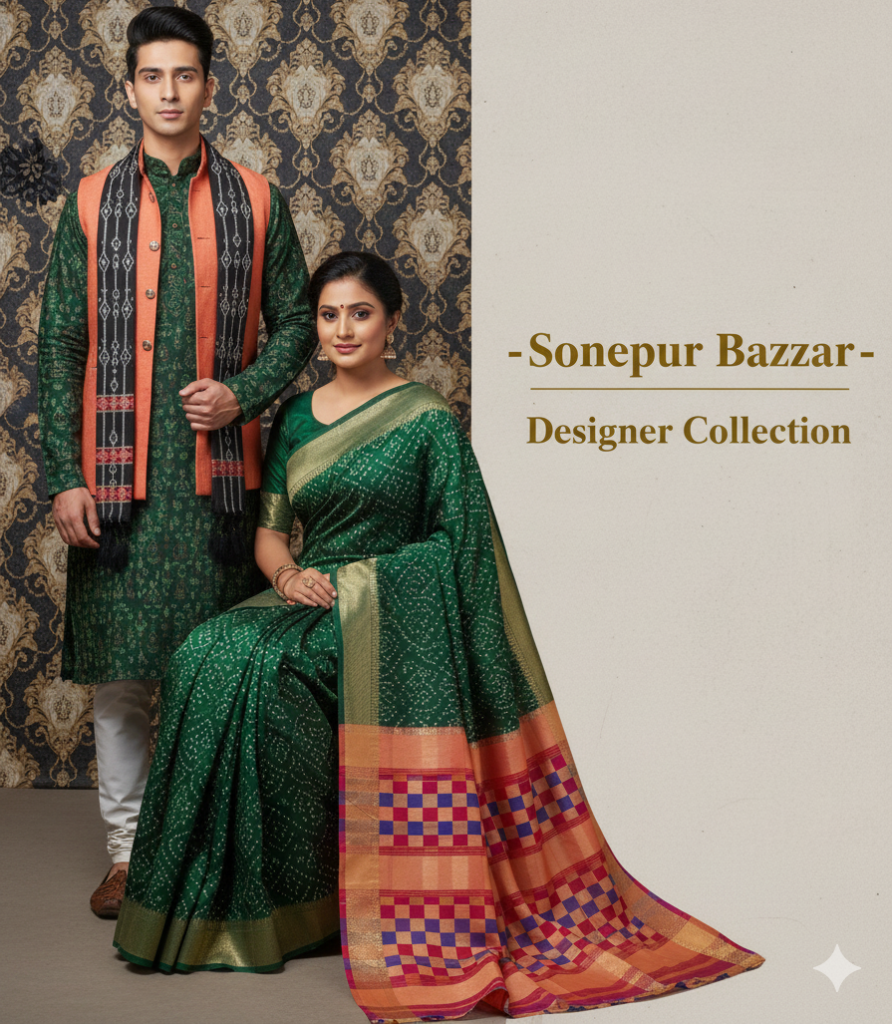
A Sambalpuri Tissue Pata Saree is an exquisite fusion of traditional Ikat weaving and shimmering tissue-style fabric, recognized for its luxurious texture, lightweight feel, and vibrant patterns. Crafted primarily in the weaving clusters of Western Odisha—especially Sonepur, Bargarh, and Sambalpur—this saree represents mastery, precision, and cultural heritage.
1. Raw Material Selection
The process begins with selecting high-grade mulberry silk, blended with metallic zari threads to create the tissue effect.
Key materials include:
- Pure silk warp and weft yarn
- Golden or silver zari
- Natural and AZO-free dyes
- Cotton for borders (optional for lightweight versions)
This combination gives the saree its classic shine, durability, and smooth texture.
2. Yarn Preparation
The silk yarn undergoes multiple treatments:
- Cleaning & degumming to remove impurities
- Softening to increase flexibility
- Stretching and aligning the yarn for even thickness
This step is essential because tissue sarees require high precision to avoid breakage during weaving.
3. Ikat (Bandha) Tie-Dye Process
Sambalpuri Tissue Pata Sarees often include traditional Ikat motifs.
The Ikat process involves:
a. Pattern Planning
Designers pre-plan motifs such as:
- Shankha (conch)
- Chakra (wheel)
- Phula (flower)
- Kumbha (temple)
- Deer, elephant, or fish motifs
- Geometric patterns
b. Yarn Mapping
The yarn is measured, stretched, and marked exactly where colors will appear.
c. Tying (Bandha)
Sections of yarn are tightly tied with cotton thread to resist dye.
d. Dyeing
Dyeing is done in stages:
- Light colors first
- Then medium shades
- Finally darker shades
After each dyeing cycle:
- Yarn is dried
- Ties are adjusted
- New sections are tied again
This multi-stage process creates the iconic blur-edge Ikat look unique to Sambalpuri textiles.
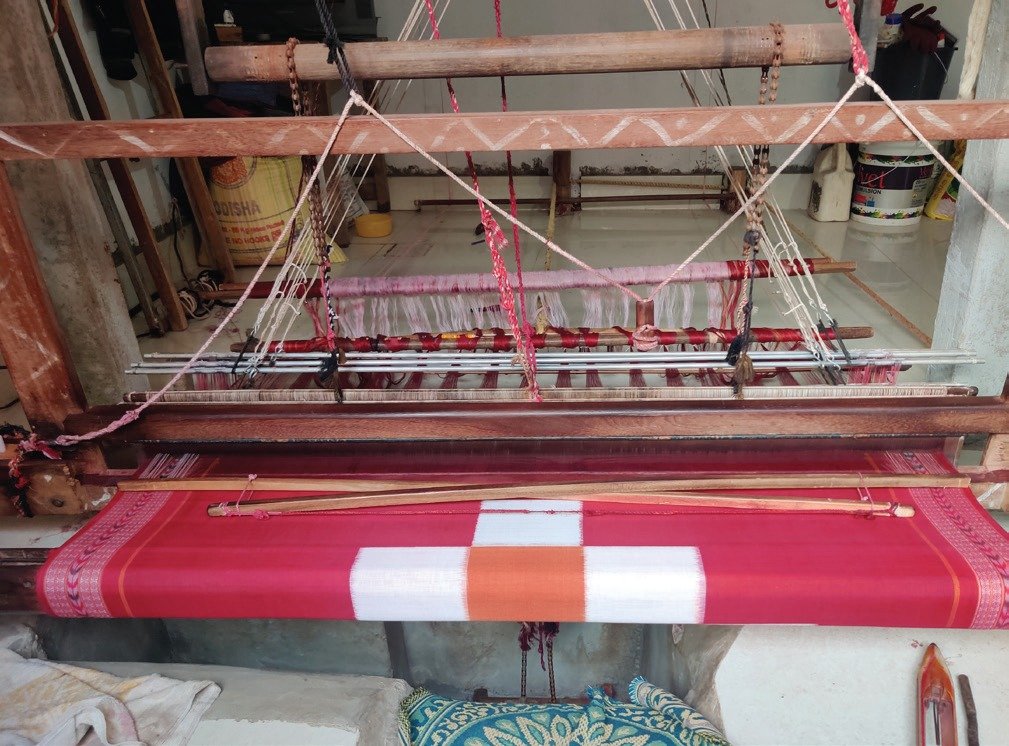
4. Preparing the Loom
Once the dyed yarn is ready:
- The warp (lengthwise yarn) is set on the loom
- Zari threads are inserted at intervals
- The weft (crosswise yarn) is prepared for shuttle weaving
- Borders and pallu sections are arranged separately
Weavers must align the dyed sections perfectly to bring the design to life.
5. Weaving the Tissue Pata Saree
This is the most skilled stage performed by master weavers.
a. Interlacing Silk + Zari
The special tissue effect is created by:
- Interlocking zari threads with silk
- Maintaining high tension on the loom
- Ensuring uniform shine without stiffening
b. Creating Borders
Traditional borders include:
- Kumbha borders
- Temple edging
- Thin-stripe designs
- Broad motifs in zari
c. Designing Pallu
The pallu often features:
- Heavy zari motifs
- Ikat patterns
- Floral or geometric layouts
- Multi-layered color bands
This part requires slow weaving and high attention to detail.
d. Finishing the Body
The body of the saree is woven with:
- Soft shine from zari
- Rich patterns from Ikat
- Smooth texture with silk weft
Depending on the design, weaving can take anywhere between 7 days to 45 days.
6. Finishing & Quality Check
After weaving:
- Saree is washed gently
- Ironed using steam finish
- Borders are tightened
- Zari alignment is checked
- Color fastness and strength tested
The saree is then folded and packed for customers.
Design Features of Sambalpuri Tissue Pata Saree
1. Luxurious Shine
Created through zari-silk weaving, giving a royal and festive appeal.
2. Lightweight & Comfortable
Despite zari, the saree remains breathable—perfect for weddings, reception, and festivals.
3. Traditional Ikat Patterns
Popular motifs include:
- Shankha Chakra
- Phula Jhari
- Bichitrapuri style motifs
- Pasapalli checks
- Nandipata designs
4. Rich Pallu Work
Often highlights elaborate zari patterns or heavy Ikat designs.
5. Elegant Borders
From thin classic lines to grand temple borders, depending on the regional weaving style.